What is the best material for paddle surface
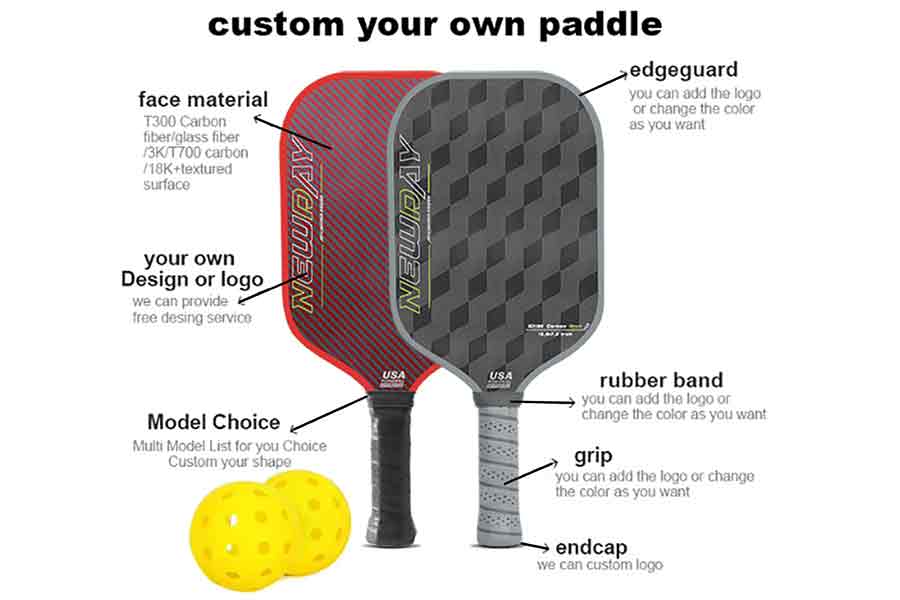
As a professional, choosing the best material for the Pickleball racket surface depends on the needs and preferences of the player. The following are several common materials and their characteristics:
Carbon Fiber:
Advantages: Carbon fiber is a lightweight and strong material that provides outstanding strength and control properties. The surface of the carbon fiber racket has good elasticity, which can help players gain better rebound and control in the game.
Disadvantages: Carbon fiber rackets can be more expensive and may feel stiff in some cases.
Composite materials:
Advantages: The composite material is a mixture of a variety of materials, with good strength and durability. Composite racquet surfaces usually have good control properties and durability, suitable for players at all levels of play.
Disadvantages: The performance of the composite material depends on the ratio and quality of the material, and there may be different quality.
Fiberglass:
Advantages: Fiberglass is an affordable and durable material with good elasticity and control properties. Fiberglass racquet surfaces provide good control and resilience.
Disadvantages: Fiberglass may feel slightly heavier and is less elastic than carbon fiber.
Kevlar
Advantages:High strength: Kevlar is a very strong material, stronger than steel, and can withstand high tensile forces.
Lightweight: Despite its high strength, Kevlar is still lighter than most other fibers, making it popular in products that require a lightweight design.
Wear resistance: Kevlar has excellent wear resistance and is suitable for the manufacture of products that need to be used for a long time but are not easily worn.
Chemical resistance: Kevlar has excellent corrosion resistance to most chemicals and can be used in harsh environments.
Disadvantages:Susceptibility to UV and moisture: Kevlar loses some of its strength when exposed to UV and moisture over a long period of time, reducing its durability.
Expensive: Compared to some other synthetic fibers, Kevlar is expensive to manufacture, making the final product relatively expensive.
High temperature intolerance: Kevlar loses strength at high temperatures and is therefore not suitable for use in high temperature environments.

First of all, carbon fiber rackets have excellent strength and durability. This material is able to withstand the use of high intensity, and can maintain stability even in the intense competition. This durability means that players can safely rely on their rackets without having to worry about damage or wear to the material.
Secondly, the carbon fiber racket has excellent control performance. Due to the strength and rigidity of carbon fiber, players can more accurately control the movement of the racket, thus improving the accuracy of the shot. This control makes carbon fiber rackets especially suitable for players who need precise control, whether it is when serving, returning or defending.
In addition, the carbon fiber racket also has good rebound performance. The elasticity of carbon fiber allows the racket to generate greater bounce when the ball makes contact with the racket face, helping players gain more power during the game. This is especially important for players who are looking to improve the speed of the ball and hit the ball from long distance.
Moreover, in terms of price and quality, carbon fiber has a better cost performance compared with kevlar toray T700 these advanced materials and there is no obvious gap in texture, which is more suitable for the vast majority of players.
What's the differences of thermoformed paddle and cold press paddle